





"Is Your Instagram Life a Total Lie? The 5 Hilarious Signs You’re One Meltdown Away from Reality Check!"
Added on November 2, 2026 inFREE ASTROLOGY
Numerology Meets Netflix: Get Your Daily Dose of Cosmic Cinema Suggestions Powered By Our AI Astrologer. Find The Show Or Movie You Were Meant To See!

Then Join Our FREE Newsletter To Watch Your Choice Of Movies And Shows For FREE Plus Get The Latest Entertainment News And Updates!



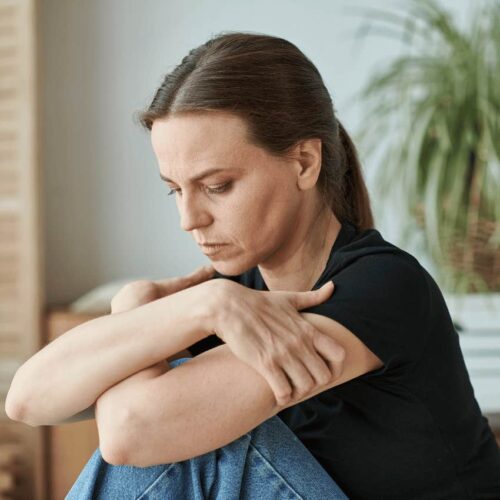
Have you ever found yourself wondering, “Is this it?” You know, that nagging feeling that even with a shiny job title or a cozy home, things just don’t feel right? Well, it turns out, a lot of us are sporting what Dr. Suzy Welch calls a “B+ life”—you know, good on paper but lacking that vibrant zing that really makes you feel alive. So, if you’re feeling a little like a pair of shoes that don’t quite fit, or if your life resembles a meticulously curated Instagram feed rather than real joy, it might just be time to dive deeper. What’s lurking beneath that surface? Let’s uncover what it means to feel drained and a bit out of sync with our true selves. Because life’s too short to settle for anything less than fabulous! LEARN MORE
Unless we’re among the lucky few, most of us have had a moment where we look at our life and think, “This can’t possibly be it.” Even if we’ve achieved the usual markers of success, it’s like wearing a pair of shoes that don’t quite fit. It’s fine, but it’s just not right.
Professor and researcher Dr. Suzy Welch calls this a “B+ life,” and says it’s an indicator we should listen to, one that points to a life that is out of sync with our true identity and values. It looks great on paper, but doesn’t feel ideal in real life. So, how do you know if this is you?
Advertisement
Welch is quick to point out that “B+” is defined by us ourselves, not by society, our families, our bosses, or anyone else. It’s not about “the American Dream” or a house in the suburbs with a picket fence. Rather, it’s a life that is just “good enough,” as opposed to one that feels vibrant, life-giving, and hope-filled as we define them.
Whether it’s in your career, your personal life, or both, you’ve hit most of the markers but nonetheless feel “numb, disengaged, or secretly exhausted,” in Welch’s words. She said this is because you’ve crafted an “outer life [that] doesn’t match your inner truth.”
Advertisement
Welch said this is basically about talking the talk but not walking the walk. You can name your goals and the things important to you, but the choices you make in your day-to-day life and in where you put your energy and time don’t at all align with your words.
You may also be the type who spends a lot of time dreaming about your ideal life, but that becomes a crutch that never actually manifests in action. This is a common trauma response by the way — it’s called maladaptive daydreaming. (Don’t ask me how I know.)
 LightField Studios | Shutterstock
Advertisement
Welch said this is a situation in which, if you were truly, brutally honest with yourself, you’d realize you are chasing clout or validation, or curating an image. But it isn’t authentic to who you are or what you want, even if it’s impressive. And often, she said, we can get so caught up in striving and pursuing this image we forget how to simply exist, to be happy and comfortable.
Tough love, but no matter how much you may feel like the misunderstood victim, the common denominator in all those broken relationships is you! I personally spent the first 15 years or so of my work life in constant conflict with bosses who I was convinced were the problem, until I realized that the real issue was that I absolutely hated every waking moment of the work I was doing. (It also turned out I was very mentally ill on top of it, but that’s a whole other subject!)
Welch said her research has repeatedly shown that patterns of “conflict, resentment, or emotional distance” are indicators that “you’re suppressing needs, boundaries, or truths about yourself” and that this has a tendency to “distort how we connect with others.”
Advertisement
If those aforementioned daydreams are all essentially about running instead of up-leveling, setting new goals, and reaching new turning points, that’s a red flag. Reinvention is one thing; that’s where you’ve finished with your former incarnation and are ready for something new. But wanting to burn your whole life down is another, and that’s an indicator that your life is “misfitted” to who you are, according to Welch.
If these five things resonate, Welch said it’s time to get really honest with yourself about what truly matters and what your values are. Once you know that, she suggested thinking about how those values intersect with your aptitudes and what she called “economically viable interests.” Life is too short for a B+ life, and the path to an A+ one, or at least an A- one, might just appear if you do a bit of soul-searching.
If that doesn’t help, Welch has developed her own test for discovering what your values are if you’re one of these people, too.
Advertisement
John Sundholm is a writer, editor, and video personality with 20 years of experience in media and entertainment. He covers culture, mental health, and human interest topics.
Auto Amazon Links: No products found.























)