






"From Hip-Hop Hero to Controversial Figure: The Shocking Truth About Afrika Bambaataa’s Legacy Revealed!"
Added on April 13, 2026 inFree Entertainment News
Numerology Meets Netflix: Get Your Daily Dose of Cosmic Cinema Suggestions Powered By Our AI Astrologer. Find The Show Or Movie You Were Meant To See!

Then Join Our FREE Newsletter To Watch Your Choice Of Movies And Shows For FREE Plus Get The Latest Entertainment News And Updates!




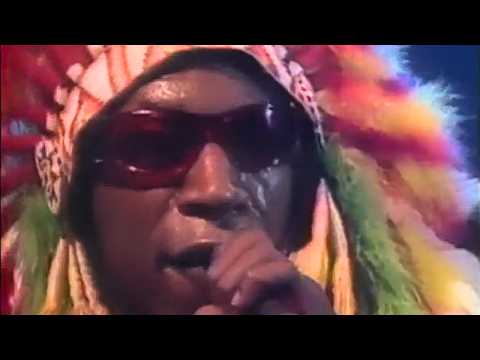
It’s a wild ride when the past comes crashing into the present, isn’t it? Afrika Bambaataa’s death didn’t exactly tie up all the loose ends; rather, it flung the stormy shadows of controversy back into the spotlight, reminding us that legacies are rarely straightforward. One breathes life into the foundations of Hip Hop, carving out space with the Universal Zulu Nation and tracks like “Planet Rock,” while the other resonates with haunting allegations of sexual abuse that linger like an unwanted echo. It’s like trying to mix oil and water—no matter what you do, they just won’t blend. As the media wades through this complex narrative, there’s an astrology lesson lurking in the chaos: sometimes, retrogrades unearth old baggage we thought we’d left behind. So, let’s dive into this intricate tapestry of myth and reality, shall we? After all, understanding Bambaataa’s dual legacy means grappling with both his monumental contributions and the shadows lurking behind them. Buckle up—it’s bound to be a bumpy exploration!
It’s obvious that Afrika Bambaataa’s death did not bring closure. It brought the same unresolved controversy back to the surface because his name still carries two histories that do not sit side by side easily. One belongs to the Bronx pioneer who helped shape Hip Hop’s early architecture through the Universal Zulu Nation and the classic, “Planet Rock.” The other belongs to the man accused by multiple people of sexual abuse, allegations that have followed him for years and now sit inside any honest accounting of his life. That much was clear in the coverage of his death, which did not separate the pioneer from the accusations so much as force them into the same frame.
That’s the difficulty of writing about Bambaataa now. Hip Hop knows how to honor its architects. Yet, it has always been less comfortable to interrogate them, especially when the accusations are serious enough to stain the mythology. Still, there is no clean version of this legacy left to recover. Bambaataa helped create something foundational. He also spent the last decade with his reputation revamped by allegations he denied in 2016, and by a 2025 civil case he lost by default after failing to appear. His death does not make those realities easier to hold.

Bambaataa became a part of Hip Hop’s origin story in The Bronx, where his parties and organizing helped give the culture an early public identity. He came out of the generation that made park jams and block parties feel like the center of something new. The DJ emerged from the shadows and was now the draw. AP noted that his events were presented as an alternative to gang violence, and that community-minded vision became part of how the Universal Zulu Nation defined itself in Hip Hop’s early years.
That public role mattered because early Hip Hop was never only about music. At the time, community building, influence, style, and the ability to turn a neighborhood gathering into something people felt they belonged to were central. Bambaataa understood that instinctively. He was playing records and moving the culture around a crusade that was still being named in real time. The Zulu Nation became part of that image, presenting itself as a unified cultural force tied to peace and creative expression, even as its founder’s name would later become inseparable from far darker allegations.
Then came “Planet Rock” in 1982 with Soulsonic Force. That record helped push Hip Hop toward electro, giving the culture a more futuristic sound at a time when its possibilities were still being invented.
History became far harder to separate from the man in 2016, when multiple men came forward accusing him of sexual abuse. Ronald Savage was one of the first to speak publicly, and others followed with allegations of their own. Bambaataa denied the claims that year, telling Fox 5 News, “I never abused nobody. You know, it just sounds crazy to people to say that, hear ‘you abused me.'”
Still, the accusations did not move through the culture like a passing scandal. They stayed and attached themselves to his name in a way that permanently altered how people heard his music and discussed his legacy, while also doing something Hip Hop often resists. They forced institutions around him to respond.
In June 2016, the Universal Zulu Nation issued a public apology to alleged victims of sexual abuse by its founder, a remarkable statement for an organization so closely tied to his image and philosophy. However, that apology did not bring clarity for long. Billboard later reported that the group switched gears and sided with Bambaataa against the accusers, which only made the larger response feel more fractured. When the person being accused assisted in crafting the culture’s mythology, accountability has a way of turning hesitant or evasive.

Then in 2025, Afrika Bambaataa lost a child sexual abuse civil case by default after failing to appear in court. The anonymous plaintiff alleged that the abuse and trafficking began in 1991, when he was 12, and continued for four years. This verdict forced the conversation to acknowledge that there was no honest way to discuss Bambaataa’s legacy, as though the accusations were some vague cloud hanging at the edges of his story. They had become part of the story itself.
Still, this wasn’t the end of the line, as in 2024, Savage sat down with AllHipHop to clarify his previous claims. Savage stated that he lied about his age, leaving Bambaataa to believe he was an adult.
“Bambaataa is not a pedophile and, in my eyes, he was doing something that was consensual with someone that he thought was of age. I wish, back in 2016, I remembered about the fake ID.” Savage added, “I wasn’t thinking about that, I had forgot about that I was in deep depression and still dealing with the trauma as an adult. I want to apologize for the little kid that didn’t know anybody and just wanted to be down with this thing called Hip Hop. So, I pretended to be older.”
“This is something that took place 35 to over 40 years ago. This man has never been convicted of anything. Let it go. I needed to set the record straight [and get] my closure.”
This may be the part of this story that the culture finds hardest to admit. Hip Hop has always known how to honor its pioneers and protect legacies. It knows how to speak in reverent language about the people who helped build something lasting. What it has struggled with, again and again, is what happens when one of those icons is accused of serious harm. The instinct is often to stall or go quiet, or even reduce everything to “complicated” and hope time does the rest. Time did not clean this up. It just made the silence more obvious.

That is why Bambaataa’s death feels less like closure than a return to an old discomfort. There is no clean tribute to write without leaving something out, and no serious history of Hip Hop can pretend his influence was small. Both facts remain. For some people, that means Bambaataa’s contributions can never be mentioned without naming the allegations alongside them. Others wrestle with the reality that Hip Hop’s foundation, like so many other institutions, was built by talented men whose reputations often carried more protection than scrutiny.
That pressure doesn’t belong only to Bambaataa. It’s held by the culture that made him legendary, defended him for years, and now must decide what honesty looks like as one of its founding figures dies, and that legacy is still split open. It is easy to celebrate origin stories, but harder to tell the truth about them once they stop sounding heroic.
Afrika Bambaataa remains part of Hip Hop’s foundation, but there is no honest way to talk about it as though it came without alleged harm. The music still matters, as do the accusations. If the culture wants to call itself mature, then it has to be able to speak plainly about both.
Auto Amazon Links: No products found.



















)