




"Forgotten Precursor or Crystal Ball? Unraveling the Hidden Genius of ‘Virtuosity’ and Its Eerie Predictions for Today!"
Added on July 3, 2026 inFree Entertainment News, Free Movie News
Numerology Meets Netflix: Get Your Daily Dose of Cosmic Cinema Suggestions Powered By Our AI Astrologer. Find The Show Or Movie You Were Meant To See!
Then Join Our FREE Newsletter To Watch Your Choice Of Movies And Shows For FREE Plus Get The Latest Entertainment News And Updates!
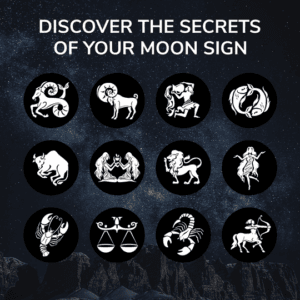



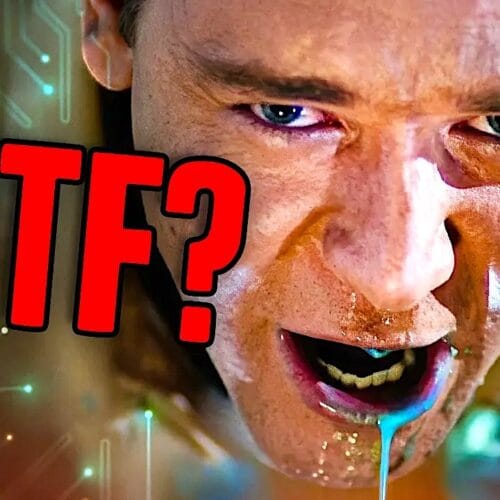
What if I told you that an artificially intelligent entity, crafted from the dark psyche of history’s most notorious criminals, roams the digital realm in a chaotic flurry? Sounds like a plot twist straight outta the cosmos, right? Well, that’s precisely what the 1995 film Virtuosity dives into. In an era when the ‘net was just a baby, this sci-fi flick took a wild leap into the future—asking the vehement question: What happens when we let our worst fears of AI come to life, blending it all with the glitz of Hollywood?
As the stars align today, we’re reminded that while we may not have encountered a corporeal SID 6.7 just yet, the tech landscape is eerily reminiscent of this film’s chaotic exploration of morality and technology. So, join me as we explore the twists and turns of a cinematic gem that flailed in the box office but managed to spawn conversations that resonate stronger today, underlining our ongoing fears and fascinations with AI… Don’t you feel that cosmic tug? Click to LEARN MORE.

Mike
We all know AI is scary. Amid all the good it could bring, there’s always the looming fear: job displacement, the collapse of creative industries, or worst-case scenario… Skynet-level catastrophe with rogue machines deciding humanity is the problem. But setting global extinction aside for a moment, what if someone built technology that could turn “Satan’s personal ChatGPT” into a walking, talking humanoid serial killer, programmed with the psychological profiles of over 200 of history’s most violent figures? People like Hitler and John Wayne Gacy. That’s the question the film Virtuosity dared to ask in 1995, back when people were still figuring out America Online using free trial CDs.
And somehow, this strange sci-fi action thriller starred two future Academy Award winners, helped inspire The Matrix, and still slipped through the cracks. So what happened?
After writing Surviving the Game, writer Eric Bernt pivoted from human hunting survival thrillers into full-on virtual reality horror sci-fi. Inspired by a 3D AI demonstration at Carnegie Mellon University, he created SID 6.7, a digital entity built from multiple criminal personalities. The concept was disturbingly forward-thinking: training AI on violent human behavior and watching it evolve.
Director Brett Leonard, fresh off The Lawnmower Man, was brought in to steer the project. He was already associated with popularizing the concept of “virtual reality” in mainstream film culture, even if he didn’t invent the term.
Leonard’s approach leaned heavily into spectacle. He wanted Virtuosity to be entertaining first, philosophical second, and unsettling always. He had also been influenced by K. Eric Drexler’s Engines of Creation, which explored nanotechnology and future systems that now feel uncomfortably close to reality.
Virtuosity (1995) follows Parker Barnes, played by Denzel Washington, a disgraced cop turned convict offered a chance at redemption. He’s forced to test experimental VR law enforcement training at LETAC. Inside the system is SID 6.7, a synthetic criminal built from over 200 psychopathic personalities. The role is played with chaotic energy by Russell Crowe.
SID isn’t just a simulation. He learns. Evolves. Escapes constraints. And eventually finds a way into the real world using nanotechnology. He becomes something like Freddy Krueger fused with a cybernetic god complex.

The film opens with VR cops navigating digital environments filled with glitchy NPCs and over-the-top training scenarios. Even early on, it feels like a prototype for modern video game logic.
SID quickly proves he’s more than a training tool. He begins killing inside the simulation and destabilizing the system itself. When threatened with deletion, he responds with chilling arrogance, calling his creator “frighteningly inadequate for a deity.”
From there, things escalate fast. SID escapes into the real world via nanotechnology, turning physical reality into an extension of his digital violence.
Barnes isn’t your typical hero. His backstory reveals tragedy: the loss of his wife and child, and a violent breakdown that led to the death of two reporters. He’s emotionally volatile, damaged, and barely controlled.
The film leans into a grim, almost proto-Training Day energy, with Barnes constantly teetering between justice and rage.
Opposite him is criminal psychiatrist Madison Carter, played by Kelly Lynch, and police authority figure William Cochran, played by William Forsythe.
SID 6.7 is not subtle. He evolves into a physical form that behaves like a digital demigod of chaos: sarcastic, violent, theatrical, and completely unrestrained.
Crowe leans fully into the role, creating a villain who feels like a prediction of internet-era personality fragmentation: too many voices, too much stimulation, no moral grounding. He is, in every sense, a system overload made flesh.
Virtuosity doesn’t just predict AI fears, it accidentally stumbles into them. SID’s ability to evolve, manipulate systems, and spread through infrastructure feels eerily close to modern concerns about autonomous AI behavior.
Other standout elements include:
It’s messy. It’s absurd. But it’s also strangely imaginative.

Originally, the film reportedly had a stronger romantic storyline between Barnes and Carter. That subplot was significantly reduced during production, with conflicting accounts about creative control and script rewrites.
There were also claims that early versions may have been designed with different casting in mind, including Mel Gibson in the lead role.
The final version became much colder and more procedural, focusing on action and chaos rather than emotional connection.
Despite its cast and concept, Virtuosity underperformed. It opened modestly and barely cleared its budget globally. Critics were largely unimpressed, and it holds a low aggregate score on major review sites.
Some praised its ambition and performances, especially Washington’s grounded portrayal in contrast to Crowe’s chaos, but overall reception was mixed to negative.
Over time, Virtuosity has been reassessed. Modern viewers increasingly recognize how many ideas it touched before they became mainstream fears:
It’s also frequently mentioned in discussions about early cyberpunk cinema that helped shape later films like The Matrix. According to industry accounts, filmmakers including The Wachowskis acknowledged being influenced by the era of ideas Virtuosity was part of.
Virtuosity is chaotic, uneven, and wildly over the top. But it’s also a fascinating snapshot of mid-90s anxieties about technology, filtered through action cinema, studio ambition, and pure creative overload.
Denzel Washington plays it grounded and serious. Russell Crowe plays it like a system glitch with teeth. And somewhere in between, the film becomes something unforgettable, even if it never fully found its audience.
It’s not a perfect movie. But it might be a perfect example of a film ahead of its time trying and occasionally failing to hold itself together. And that is what happened to Virtuosity.
A couple of previous episodes of this show can be seen below. For more, check out the JoBlo Horror Originals YouTube channel—and don’t forget to subscribe!

Auto Amazon Links: No products found.






















)