



"Jodie Foster Shocks Hollywood: Calls Brad Pitt’s Oscar-Winning ‘F1’ a Robotic Brainchild – Is AI Taking Over Tinseltown?"
Added on July 3, 2026 inFree CelebrityNews
Numerology Meets Netflix: Get Your Daily Dose of Cosmic Cinema Suggestions Powered By Our AI Astrologer. Find The Show Or Movie You Were Meant To See!
Then Join Our FREE Newsletter To Watch Your Choice Of Movies And Shows For FREE Plus Get The Latest Entertainment News And Updates!



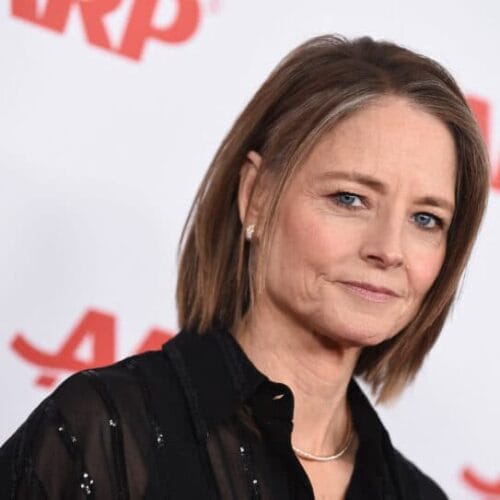
Is Hollywood losing its creative spark to artificial intelligence? With Mercury in retrograde and communication all kinds of twisted, it’s no surprise that Jodie Foster chose the Aspen Ideas Festival to drop some serious truth bombs about AI’s grip on the film industry. The Oscar-winning actress didn’t hold back when she pointed at Brad Pitt’s blockbuster “F1,” suggesting it might as well have been assembled by a computer. Now that’s a thought! While Foster congratulated the movie on its box office success, she raised some eyebrows—questioning the very storytelling that lights up our screens. In a world where technology swiftly evolves, are we watching a shift in the balance of creativity? Buckle up, because this is shaping up to be a conversation that could steer the future of filmmaking!
Jodie Foster isn’t holding back when it comes to Hollywood’s growing reliance on artificial intelligence.
During a candid appearance at the Aspen Ideas Festival, the Oscar-winning actress sparked debate after pointing to Brad Pitt’s hit racing drama “F1” as an example of filmmaking that felt shaped by AI.
While praising the movie’s commercial success, Foster questioned its storytelling approach, sparking a broader conversation about technology’s rapidly expanding role in the entertainment industry.
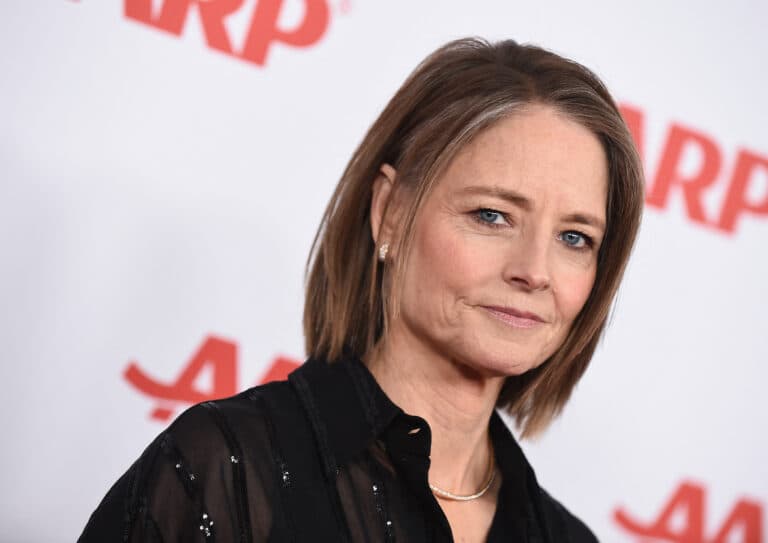
While speaking with former Sony executive Michael Lynton, Jodie Foster discussed how artificial intelligence is reshaping modern filmmaking.
As the conversation turned to AI’s growing influence, Foster singled out one of last year’s biggest box office successes: Pitt’s “F1.”
“I don’t say this disparagingly, how could I? This movie went on to make millions of dollars but look at a movie like F1 and I’m like, F1 was made by AI,” she said, according to Variety.
Foster also added, “Wasn’t it? I mean, the structure was exactly the structure that you would learn in school.”
The actress continued, explaining that it wasn’t the technology behind the visuals that caught her attention, but rather the film’s storytelling and dialogue.
She argued the cast delivered “lines exactly the way it would be written if a computer was writing exactly what would be the right thing for that time.”
Foster added that the filmmakers “were able to dominate the technology to make something big and beautiful and potentially where a lot of the information comes from other places.”
Jodie Foster’s comments come despite “F1” becoming one of last year’s biggest theatrical successes.
Directed by Joseph Kosinski and written by Ehren Kruger, the sports drama starred Brad Pitt alongside Damson Idris, Kerry Condon, Javier Bardem, and Tobias Menzies.
Released in theaters last June, the movie earned an impressive $634.1 million worldwide against a reported budget between $200 million and $300 million.
Beyond its commercial performance, “F1” also received four Academy Award nominations and ultimately won the Oscar for Best Sound.
Long before Foster weighed in, Kosinski had spoken extensively about making the film feel as authentic as possible, emphasizing practical filmmaking over digital shortcuts.
Speaking to Esquire last year, director Kosinski explained that authenticity was one of the driving forces behind the project.
“The audience can tell when something has been captured for real and when it’s been manufactured,” he said, revealing that the production developed “a much smaller, lighter camera system” to capture the racing action.
Rather than relying solely on visual effects, the filmmakers shot scenes during actual Formula One Grands Prix.
“Overall, I wanted it to feel like you’re really at the race. So we actually shot scenes at Grands Prix, and that meant the windows for shooting were very, very narrow,” Kosinski explained.
He revealed there were occasions when the cast and crew had only a few minutes to shoot a scene.
“The time constraint was a huge challenge, but at the same time it kind of infuses the scenes with energy and a realism that we couldn’t have gotten any other way,” he explained.
While “F1” became Jodie Foster’s example during the discussion, the broader conversation centered on artificial intelligence’s growing role across Hollywood.
“AI is one more giant step forward into changing the industry,” the “Panic Room” star said before Lynton asked the question many creatives continue debating. “The big question is, is it going to replace actors and writers?” he asked.
Foster answered candidly, noting, “We do replace people.” She pointed to the growing use of AI to replicate background performers rather than hiring additional actors, arguing that technological advances should not come at the expense of workers.
“We’re getting rid of a lot of jobs and hopefully, things like unions will be able to come in and say, you can use my actor 20 times, but you’re going to pay him 20 times. And I think that’s fair,” she shared.
While expressing concern over AI’s impact, Foster also acknowledged that the technology can serve a creative purpose when used thoughtfully.
“What we all would love is that filmmakers would be able to dominate AI, and never lose sight of that,” she said. The 63-year-old pointed to her recent film “A Private Life,” which incorporated AI during one of its dream sequences.
Although she felt the technology suited the mystery thriller, she admitted the AI-generated imagery “made no sense.”
The debate surrounding artificial intelligence has become one of Hollywood’s most polarizing issues in recent years, with actors, writers, directors, and studios weighing its benefits and risks.
However, not everyone shares Foster’s cautious outlook, as “I, Robot” director Alex Proyas argued last month that AI could actually help repair what he described as the industry’s “broken” production process.
Auto Amazon Links: No products found.




















)