






"Candace Owens’ Legal Houdini Act Flops: Judge’s Ruling Leaves Fans Wondering – Is This the End of the Stage Show?"
Added on November 25, 2026 inFree CelebrityNews
Numerology Meets Netflix: Get Your Daily Dose of Cosmic Cinema Suggestions Powered By Our AI Astrologer. Find The Show Or Movie You Were Meant To See!

Then Join Our FREE Newsletter To Watch Your Choice Of Movies And Shows For FREE Plus Get The Latest Entertainment News And Updates!




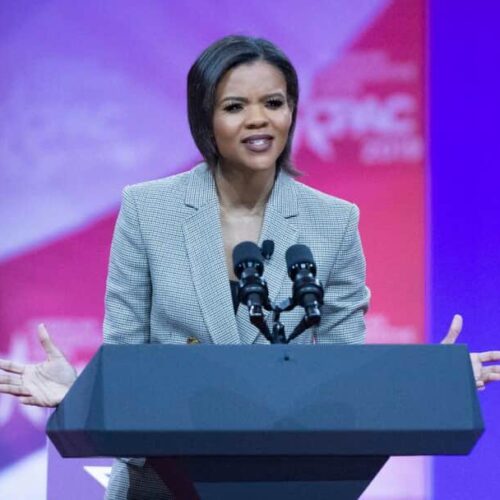
Ever felt like the cosmos was just out to get you? Well, Candace Owens might be wishing for a little astrological backup right now as she finds herself stuck in a courtroom conundrum! A federal judge has tossed aside her attempt to sidestep a defamation lawsuit that could have her facing some seriously uncomfortable questioning over her statements on conspiracy theories related to Charlie Kirk’s former security chief. With Mercury retrograde wreaking havoc, is this just the universe’s way of telling her to slow down and think twice before she speaks? The drama continues as we dive deeper into Owens’ legal mess, exploring how this latest twist not only keeps her in the legal spotlight but also raises eyebrows about her fiery commentary on controversial topics.
To learn more about the unfolding saga, click here: Learn More
Candace Owens has suffered a courtroom setback, and the judge’s explanation leaves little room for celebrating an early escape!
The conservative commentator tried to have a defamation lawsuit brought by Charlie Kirk‘s former security chief thrown out, arguing that his claims could not survive legal scrutiny.
A federal judge has rejected that effort, leaving Candace Owens facing a continuing legal battle over allegations linked to conspiracy theories about Kirk’s assassination.

On November 20, Chief U.S. District Judge William L. Campbell Jr. denied a dismissal motion filed by Owens and her businesses, Candace Owens LLC and GeorgeTom, Inc. The case was brought by Brian Harpole, who helped oversee security for Kirk before the Turning Point USA founder was fatally shot in September 2025.
In the two-page court order, Campbell concluded that Harpole’s complaint contained “enough facts to clear the low bar of plausibility.” He also faulted the defense for making arguments that interpreted disputed facts in the way most favorable to Owens and her companies.
That approach, the judge explained, was not appropriate when deciding whether a lawsuit can proceed beyond its initial stage. The ruling is a setback for Owens, but it does not establish that she committed defamation or that Harpole’s allegations are true.

Owens’ lawyers had another strategy for ending the case early. They invoked Tennessee’s Public Participation Act, an anti-SLAPP statute designed to protect qualifying speech against certain lawsuits, and asked the court to dismiss the complaint and award legal fees.
However, Campbell ruled that the statute’s special procedural provisions cannot be used in this federal proceeding because they conflict with federal rules governing complaints and dismissal motions.
The judge pointed to earlier decisions from Tennessee federal courts reaching the same conclusion. The ruling concerned that procedural shortcut, not every free-speech defense Owens might raise later.
There was another procedural blow: Owens’ side submitted transcripts of podcast episodes and interviews to support its motion, but the judge declined to consider them after Harpole objected.
Rather than deciding whose version of the disputed broadcasts was right, the court assessed whether Harpole’s allegations were sufficient at this stage.

Harpole’s April 30 lawsuit names Owens, her two companies and podcast guest Mitchell Snow. He alleges that Owens amplified Snow’s unsubstantiated account of a supposed meeting at Fort Huachuca, Arizona, involving Harpole, military officials and Kirk’s widow, Erika Kirk, before the assassination.
Harpole denies attending such a meeting or participating in any plot against the conservative activist. His complaint points to flight records that, he argues, contradict the story and alleges the broadcasts damaged his reputation, caused distress, and hurt his security business.
The suit seeks monetary damages and removal of statements Harpole considers defamatory. Those are allegations made by the plaintiff, not factual findings by the court, and there is no substantiated evidence establishing that Erika Kirk or Harpole participated in an assassination conspiracy.

Before the judge’s decision, Owens’ attorneys maintained that the statements challenged by Harpole were not actionable defamation. According to Headline USA, the defense characterized them as opinion, rhetorical exaggeration, or questions that could not reasonably carry a defamatory meaning.
Her lawyers also disputed whether the complaint sufficiently alleged actual malice or damage to Harpole. But Campbell did not conduct a trial or make a final finding on those arguments.
He ruled only that the complaint survives the threshold test applicable to a motion to dismiss, under which the plaintiff receives the benefit of reasonable inferences from his pleaded facts. The denial means the case can continue, with further evidence and legal arguments still potentially determining its outcome.

Owens is fighting a separate defamation dispute involving French President Emmanuel Macron and first lady Brigitte Macron. A Delaware judge dismissed Owens personally from that earlier case on jurisdictional grounds while allowing claims against her companies to continue.
The Macrons then filed a new lawsuit against Owens in Tennessee in November, according to The Guardian. Those proceedings are distinct from Harpole’s action and do not determine whether his claims will succeed.
As The Blast previously reported, her commentary about Kirk’s killing has also fueled tensions with former allies and become a source of concern among people close to her.
For now, the latest ruling removes two avenues for early dismissal. As The Blast also noted, Erika had separately sent Owens a cease-and-desist letter, although she did not bring this lawsuit.
Harpole’s defamation allegations remain unresolved, and Owens can still contest them as the case proceeds.
Which way will the gavel finally swing for Candace Owens?
Auto Amazon Links: No products found.





















)