




Think Viking Myths Are Solid? Honey, These 10 Shocking Truths Will Wreck Your Nordic Fantasy Faster Than Thor’s Hammer!
Added on December 2, 2025 inFun And Facts Cards




Numerology Meets Netflix: Get Your Daily Dose of Cosmic Cinema Suggestions Powered By Our AI Astrologer. Find The Show Or Movie You Were Meant To See!
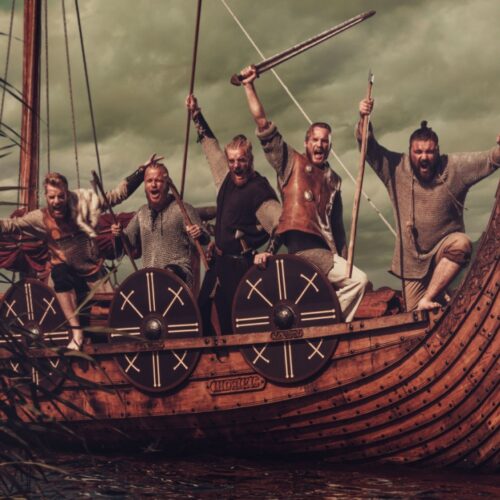
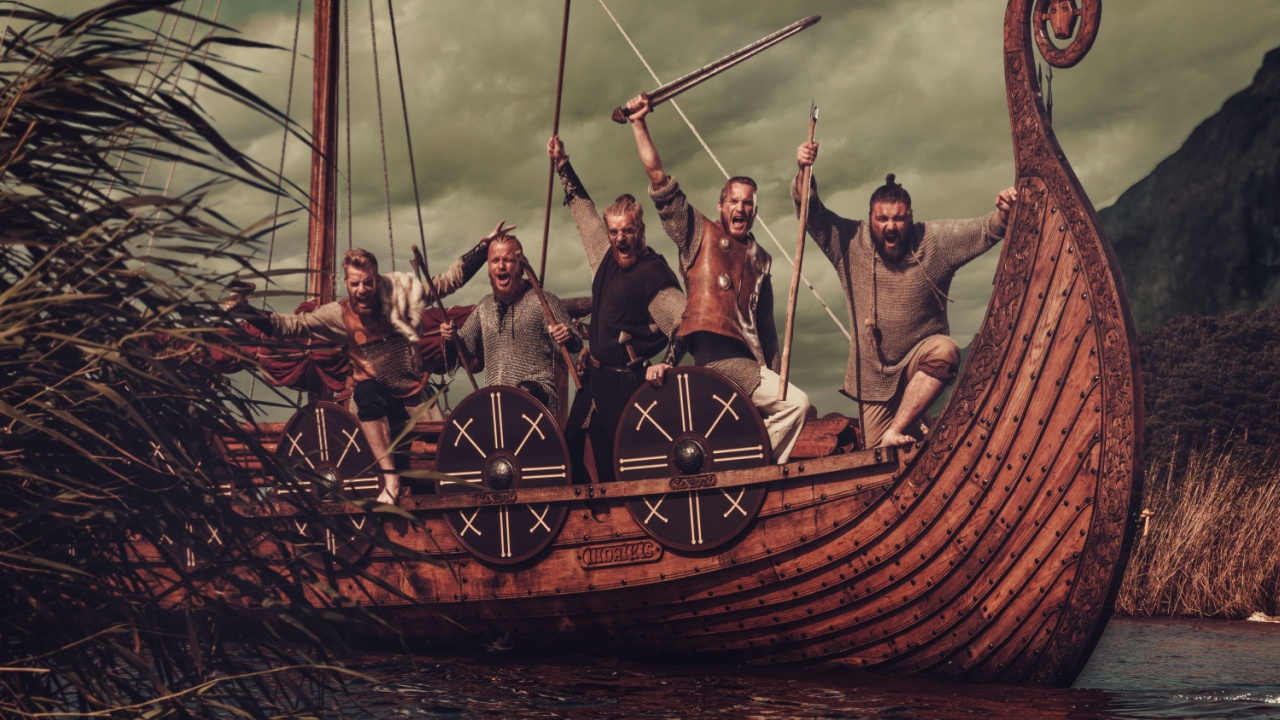
Ever wondered if the Viking stereotype — horned helmets, wild raids, and chaotic seas — was more myth than reality? Especially today, with Mercury doing its retrograde magic, making us question everything we thought we knew, it’s the perfect time to dissect some of the biggest Viking myths that have sailed the internet for centuries. Spoiler: Their story is not just about pillaging and plundering; it’s so much richer, messier, and frankly, way more fascinating. So, before you don your imaginary horned helmet, let’s set the record straight and unearth ten Viking truths that’ll have you rethinking these Norse seafarers entirely. LEARN MORE.
Norse seafarers from Scandinavia, popularly known as Vikings, have a certain reputation. We often picture them as towering figures in horned helmets, sailing the seas purely to raid and cause chaos. This image, shaped by centuries of stories, art, and entertainment, is powerful. It is also quite different from the historical record.
The people of the Viking Age were complex, their society was varied, and their story is far more interesting than the simple caricature suggests. Here are ten common beliefs about Vikings that just do not hold up.

Image Credit: Deposit Photos.
The term “Viking” can be misleading. It wasn’t an ethnic identity like “Dane” or “Norwegian.” Instead, it described a role or activity. To go “a-viking” meant to go on an expedition, which could involve raiding, trading, or exploring. The people who did this came from different Scandinavian communities, tribes, and regions.
They did not see themselves as one unified nation called “the Vikings.” There was considerable diversity among them, and they often fought amongst themselves as much as they fought outsiders. It’s more accurate to think of the Viking Age as a period when many different Scandinavian groups became prominent on the world stage.

Image Credit: Deposit Photos.
The image of the filthy, wild barbarian is a persistent one, but it doesn’t align with archaeological findings. Discoveries at Viking sites have unearthed a surprising number of personal grooming tools. Combs, tweezers, and even ear spoons were common items.
Observers from other cultures noted that Vikings combed their hair daily. Irish records mentioned their cleanliness, and English accounts grumbled that their neat hairstyles and regular baths made them way too popular with the local ladies.

Image Credit: Deposit Photos.
The Viking Age, spanning from the late 8th to the 11th century, was a violent time in Europe for everyone. While Vikings certainly committed brutal acts during their raids, their behavior was not out of the ordinary for the era. Many accounts of their ferocity come from their victims, particularly monks who were literate and whose monasteries were frequent targets.
This created a biased historical record. Rulers like Charlemagne, a celebrated Christian emperor, were responsible for massacres that rivaled any Viking raid. The violence of the Vikings was part of a much broader pattern of conflict across the continent.

Image Credit: Deposit Photos.
While the Viking homeland was Scandinavia, their influence and settlements spread far and wide. They were exceptional sailors and navigators, which allowed them to travel vast distances. Vikings established settlements in Iceland, Greenland, and briefly, North America.
They also moved into parts of Britain, Ireland (founding cities like Dublin), and France (founding Normandy). Others traveled east, settling along the rivers of what is now Russia and Ukraine, and even served as elite mercenaries for the Byzantine Emperor in Constantinople. Many who left never returned, integrating into the local populations.

Image Credit: Deposit Photos.
This is perhaps the most famous Viking myth of all. The iconic horned helmet is a complete fabrication. There is no archaeological or historical evidence that Vikings ever wore horned helmets into battle. This imagery comes from the 19th century, specifically from the costume designs for Richard Wagner’s opera “Der Ring des Nibelungen.”
The artist, Carl Emil Doepler, drew inspiration from ancient Germanic artifacts, not actual Viking gear. Real Viking helmets were much more practical, usually consisting of a simple iron or leather bowl, sometimes with a nose guard for protection.

Image Credit: Atis Everss / Shutterstock.
The word “Viking” is synonymous with raiding for a reason; they did a lot of it. But that wasn’t the whole story. Many Scandinavians of the era were peaceful traders, farmers, and explorers. They established extensive trade networks that stretched from Canada to Central Asia.
They traded goods like furs, amber, and walrus ivory for silver, silks, and spices. Their voyages were as much about commerce and settlement as they were about plunder. Focusing only on the raiding aspect ignores their significant contributions as merchants, settlers, and craftspeople who connected distant cultures.

Image Credit: Shutterstock.
The gruesome image of a Viking warrior drinking ale from the skull of a defeated enemy is pure fiction. This idea arose from a mistranslation of an Old Norse poem. A line describing heroes drinking from “curved branches of skulls” was misinterpreted to mean actual skulls.
The phrase was a kenning, a type of poetic metaphor, that referred to drinking horns. Vikings did use animal horns, along with wooden or metal cups, as drinking vessels. Skulls were not on the menu.

Image Credit: Deposit Photos.
The classic image of a Viking funeral is a longship set ablaze, drifting into the mist, Hollywood composers swelling in the background. Sometimes, it’s bodies tossed overboard in the thick of battle, farewell said with a splash. Turns out, the actual story is more down-to-earth, literally.
Archaeological digs show that most Vikings were buried in the ground. Fancy boat burials were reserved for the truly important (think chieftains or wealthy folks, not every axe-wielder out there). Cremations did happen, but again, it wasn’t the everyday send-off. Sometimes ashes and even whole ships were buried under mounds, but as for cinematic sea burials? Those were rare and likely hyped up for dramatic effect.

Image Credit: Shutterstock.
The idea that Vikings used crude, primitive weapons is another common misunderstanding. While a simple farmer might have fought with a wood axe or a spear, dedicated warriors and chieftains possessed high-quality arms. Viking-age blacksmiths were skilled artisans.
They produced well-balanced swords, some with intricate patterns welded into the blades, and beautifully decorated axes. Wealthier warriors took great pride in their weapons, which were often personalized and seen as status symbols. Archaeological finds showcase a high level of craftsmanship and functional design.

Image Credit: Deposit Photos.
Genetics is a funny thing. We tend to picture all Vikings with flowing blonde hair, but historical and genetic evidence show a different picture. Studies of Viking remains reveal that brown hair was very common, especially in areas like Denmark.
Their expansion and interaction with other cultures also introduced more genetic diversity. Vikings intermingled with people in Britain, Ireland, and Eastern Europe, meaning many had Celtic or Slavic ancestry. The Viking world was a mix of hair colors, including blonde, brown, and red.

Image Credit: Deposit Photos.
The Viking Age was a period of incredible change, exploration, and cultural exchange, led by a people far more nuanced than their popular image suggests. Understanding them means looking past the horned helmets and bloodthirsty tales to see the farmers, traders, artists, and explorers who left their mark on the world.
By doing so, we gain a richer, more accurate view of a fascinating chapter in human history. It encourages us to question other historical stereotypes we might hold and to always dig a little deeper for the full story.
I’m a Language and Literary Studies (Honors) graduate with 11 years of experience in magazine and blog writing and content creation. I’m passionate about storytelling for change and believe in the power of words to make a difference. My writing is thought-provoking, accessible, and engaging, focusing on the Psychology of human behavior, complex social issues, personal experiences, and the latest trends. I’m a wife and a Mom of three.
I’m a Language and Literary Studies (Honors) graduate with 11 years of experience in magazine and blog writing and content creation. I’m passionate about storytelling for change and believe in the power of words to make a difference. My writing is thought-provoking, accessible, and engaging, focusing on the Psychology of human behavior, complex social issues, personal experiences, and the latest trends. I’m a wife and a Mom of three.
Auto Amazon Links: No products found.











This will close in 0 seconds

This will close in 0 seconds











)