

9 Shakespeare Myths That Are So Wrong, Even Mercury in Retrograde Can’t Save Them!
Added on December 7, 2025 inFun And Facts Cards




Numerology Meets Netflix: Get Your Daily Dose of Cosmic Cinema Suggestions Powered By Our AI Astrologer. Find The Show Or Movie You Were Meant To See!
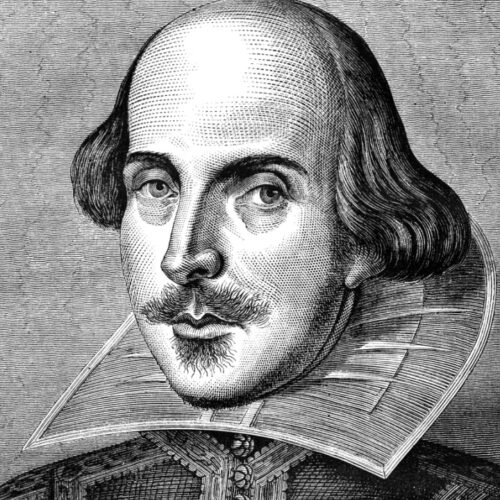
Ever wonder if William Shakespeare was more than just the dusty, quill-wielding wordsmith your high school English teacher made him out to be? Well, grab your cosmic charts and buckle up, because the myths swirling around the Bard are juicier than a Leo’s midday drama! From misinterpreting Juliet’s sighs under a Scorpio moon to the not-so-round Globe theater under Gemini’s tricky influence—there’s a wild swirl of fact and fiction tangled in Shakespeare’s story. Spoiler alert: he wasn’t just a lone genius scribbling in tights, and those famous “wherefore” lines? They’re not what you think, especially today with Mercury doing its retrograde dance in Gemini, reminding us that words—especially Shakespeare’s—are trickier than they seem. So, if you’re ready to unmask the myths and join me on this cosmic curious romp through nine of the biggest Shakespeare misconceptions, let’s dive in! LEARN MORE
William Shakespeare. The name itself brings to mind dusty textbooks, actors in tights, and maybe a high school English class you tried to sleep through. He’s one of history’s most celebrated writers, but much of what people believe about the Bard of Avon is just plain wrong.
From his creative process to the very shape of his theater, centuries of myths have piled up around him. It’s time to separate the fact from the fiction and get to know the real Will Shakespeare. Here are nine misconceptions about the famous playwright.

Image Credit: Konstantin Makovsky – Public Domain/Wiki Commons.
Juliet stands on her balcony and famously asks, “O Romeo, Romeo, wherefore art thou Romeo?” It’s easy to assume she’s looking for him, wondering where he is in the garden below. But that’s not what “wherefore” means at all.
In Shakespeare’s time, “wherefore” meant “why.” Juliet isn’t asking where Romeo is; she’s asking why he has to be Romeo Montague, a member of her family’s rival house. She’s lamenting his name and identity, the one thing keeping them apart. It’s a question of fate, not location.

Image Credit: Shutterstock.
The “Shakespeare authorship question” suggests that a man from Stratford-upon-Avon couldn’t possibly have written such brilliant plays. Theories point to others, like Francis Bacon or the Earl of Oxford, as the “real” authors. However, the vast majority of literary historians and Shakespearean scholars agree that William Shakespeare wrote his own works.
The debate exists almost entirely outside of mainstream academia. The academic consensus is that Shakespeare was the author.

Image Credit: George Romney / Adam Cuerden, Public Domain/Wiki Commons.
Shakespeare was certainly a master of language, but the claim that he single-handedly invented 1,700 words is an overstatement. This number comes from counting words that first appeared in print in his plays. The problem is, he was writing down language that was likely already being used in everyday speech.
While he did coin some words and popularize many others (“eyeball,” “swagger,” “lackluster”), he was more of a language recorder than a mass inventor. He captured the living, breathing vocabulary of his time on paper. He was the first to write down many words, but they were likely already part of spoken English.

Image Credit: William Shakespeare – The Tragical Historie of Hamlet, Prince of Denmark – Public Domain/Wiki Commons.
Shakespeare was a genius, but not because he dreamed up all his plots from nothing. Instead, he was a master adapter. He borrowed heavily from history, mythology, and older stories. Hamlet was based on a Scandinavian legend, Romeo and Juliet came from an Italian poem, and his history plays were adaptations of English chronicles.
His true brilliance lay in his ability to take well-known, existing tales and reshape them into deeply profound explorations of the human condition. Through his work, he crafted complex, multi-dimensional characters that reflected the intricacies of real-life emotions and struggles.

Image Credit: Unknown author – Svenska Dagbladets Årsbok – CC0/Wiki Commons.
This is one of the most iconic images associated with Shakespeare, but it’s a theatrical mix-up. Hamlet does deliver his famous “To be, or not to be” soliloquy, contemplating life and death. He also holds a skull and speaks to it, lamenting the death of the court jester, Yorick.
These two powerful moments happen in separate scenes. The skull scene (“Alas, poor Yorick! I knew him, Horatio”) occurs much later in the play. The popular image conflates two different, but equally memorable, parts of Hamlet.

Image Credit: Deposit Photos.
We often hear Shakespeare’s iconic theater referred to as “the wooden O,” a phrase that immediately conjures up an image of a perfectly circular building. However, while it was indeed an open-air amphitheater made of wood, archaeological evidence unearthed from the Globe’s original foundation tells a more complex story. The structure wasn’t a perfect circle at all.
It was actually a polygon, most likely with 20 sides, which created a roughly circular appearance from a distance. So, while it functioned as an “O” in terms of audience arrangement, it was technically more of a “polygonal O.”

Image Credit: Noel le Mire (engraver, 1724-1801), Jean-Michel Moreau (artist, 1741-1814), John Bell (publisher, 1745-1831) – Public Domain/Wiki Commons.
The romantic image of the lone artistic genius is compelling, but it doesn’t fit the collaborative world of Renaissance theater. Playwriting was often a team sport. Records and textual analysis show that Shakespeare collaborated with other playwrights on several plays.
For example, Titus Andronicus and the Henry VI trilogy show signs of co-authorship. Later works like Pericles and The Two Noble Kinsmen were confirmed collaborations with writers like George Wilkins and John Fletcher.

Image Credit: painted by the Sir Joshua Reynolds – engraved by Robert Thew – CC BY-SA 4.0/Wiki Commons.
According to a long‑standing superstition, saying the name Macbeth inside a theater will bring bad luck. Actors refer to it as “The Scottish Play.” The legend claims that real witches’ curses were used in the play’s text, dooming productions from the start. A more historically grounded explanation is that the superstition grew from the play’s dark subject matter and its association with witchcraft.
King James I, who ruled when Macbeth was first performed in 1606, was deeply fascinated and fearful of witchcraft, even writing a treatise on the subject (Daemonologie). Macbeth features witches, spells, and violent deaths; audiences and actors alike linked it with danger. Accidents and misfortunes during productions reinforced the belief, embedding the “curse” into theatrical tradition rather than actual cause‑and‑effect

Image Credit: Anonymous engraver – Burton’s Gentleman’s Magazine, 1839 – Public Domain/Wiki Commons.
Shakespeare is often called the greatest Elizabethan playwright, which is only partially true. Queen Elizabeth I reigned from 1558 to 1603. Shakespeare wrote many of his most famous plays, including Hamlet and A Midsummer Night’s Dream, during her rule.
However, she died in 1603, and Shakespeare continued writing for another decade under the next monarch, King James I. This later period, known as the Jacobean era, produced masterpieces like King Lear, Macbeth, and The Tempest. He was both an Elizabethan and a Jacobean writer.

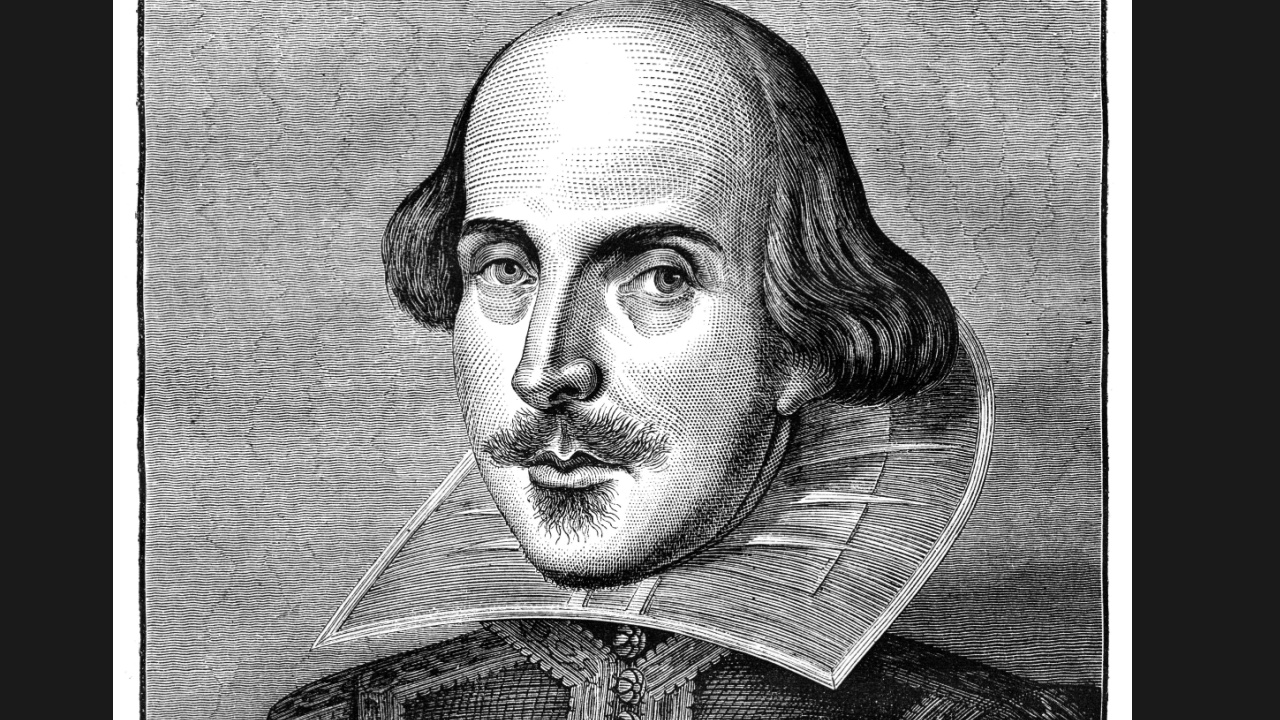
Image Credit: Attributed to John Taylor – Official gallery link – Public Domain/Wiki Commons.
Next Shakespeare discussion loading? Now you’re armed with the facts, no poetic license required. These myths have had a good run, but the true stories make Shakespeare’s world even more interesting. Behind the ruffled collars and quill pens, he was a sharp observer, an adapter, and, yes, a collaborator who understood people and language on a legendary level.
Calling out the misconceptions doesn’t shrink his genius; it just brings him a little closer to our own very human world. Whether you’re a fan of his works or simply curious about the man behind them, these little-known truths will give you a deeper appreciation for the iconic playwright.
I’m a Language and Literary Studies (Honors) graduate with 11 years of experience in magazine and blog writing and content creation. I’m passionate about storytelling for change and believe in the power of words to make a difference. My writing is thought-provoking, accessible, and engaging, focusing on the Psychology of human behavior, complex social issues, personal experiences, and the latest trends. I’m a wife and a Mom of three.
I’m a Language and Literary Studies (Honors) graduate with 11 years of experience in magazine and blog writing and content creation. I’m passionate about storytelling for change and believe in the power of words to make a difference. My writing is thought-provoking, accessible, and engaging, focusing on the Psychology of human behavior, complex social issues, personal experiences, and the latest trends. I’m a wife and a Mom of three.
Auto Amazon Links: No products found.










This will close in 0 seconds

This will close in 0 seconds











)