







8 Ancient Civilizations That Ghosted History So Hard, Archaeologists Are Still Side-Eyeing Their Disappearing Acts!
Added on December 11, 2025 inFun And Facts Cards




Numerology Meets Netflix: Get Your Daily Dose of Cosmic Cinema Suggestions Powered By Our AI Astrologer. Find The Show Or Movie You Were Meant To See!


Ever wonder why some ancient empires just ghosted on us without so much as a goodbye letter? It’s like they vanished mid-sentence, leaving behind dusty ruins and mysteries thicker than a Leo’s mane. History usually unfolds with a neat beginning, middle, and dramatic end — empires rise, conquer, and crash with a bang for the ages. But every now and then, you get these lost civilizations who just… poof! Disappear like Mercury in retrograde messing with your GPS. Could it be climate chaos? Political soap operas? Or perhaps cosmic forces nudging history off script? Whatever the case, their silent exits beckon us to puzzle over tales untold. Buckle up as we dive into eight ancient societies that went from powerful to invisible, and trust me, it’s a lineup you didn’t see coming. LEARN MORE.
History is full of stories with clear beginnings, middles, and ends. Empires rise, they conquer, and then they fall, often with a dramatic final chapter recorded for all to read. But some stories are missing their last pages. A few advanced societies, after building impressive cities and developing unique cultures, simply faded away.
They left behind silent ruins and confounding mysteries that continue to puzzle historians and archaeologists today. These are the tales of civilizations that executed a historical ghosting, leaving us to wonder what exactly happened.
Here are 8 ancient civilizations that just vanished into oblivion.

Image Credit: Shutterstock.
Among the world’s earliest urban cultures, the Indus Valley Civilization was a heavyweight. Flourishing around 2500 BCE in what is now Pakistan and northwest India, this society was massive, covering more area than ancient Egypt or Mesopotamia. Its cities, like Mohenjo-Daro and Harappa, were marvels of urban planning with sophisticated drainage systems, multi-story brick houses, and organized street grids.
They developed a system of writing that remains undeciphered, leaving their thoughts and records a complete mystery. For a society so advanced, its decline around 1800 BCE is baffling. There are no signs of a massive invasion or a single catastrophic event. Instead, the cities appear to have been slowly abandoned. Theories point to climate change, perhaps a shift in monsoon patterns that disrupted their agriculture, or the drying up of a major river.

Image Credit: Shutterstock.
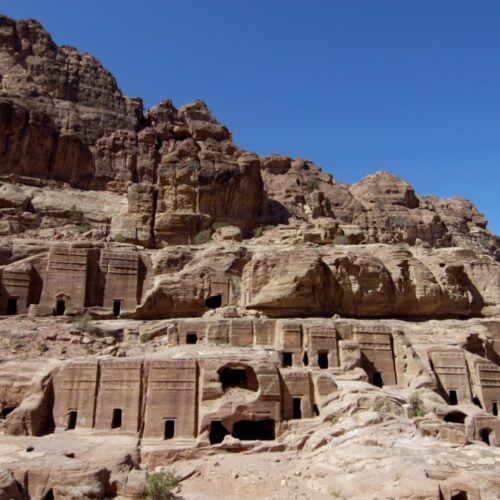
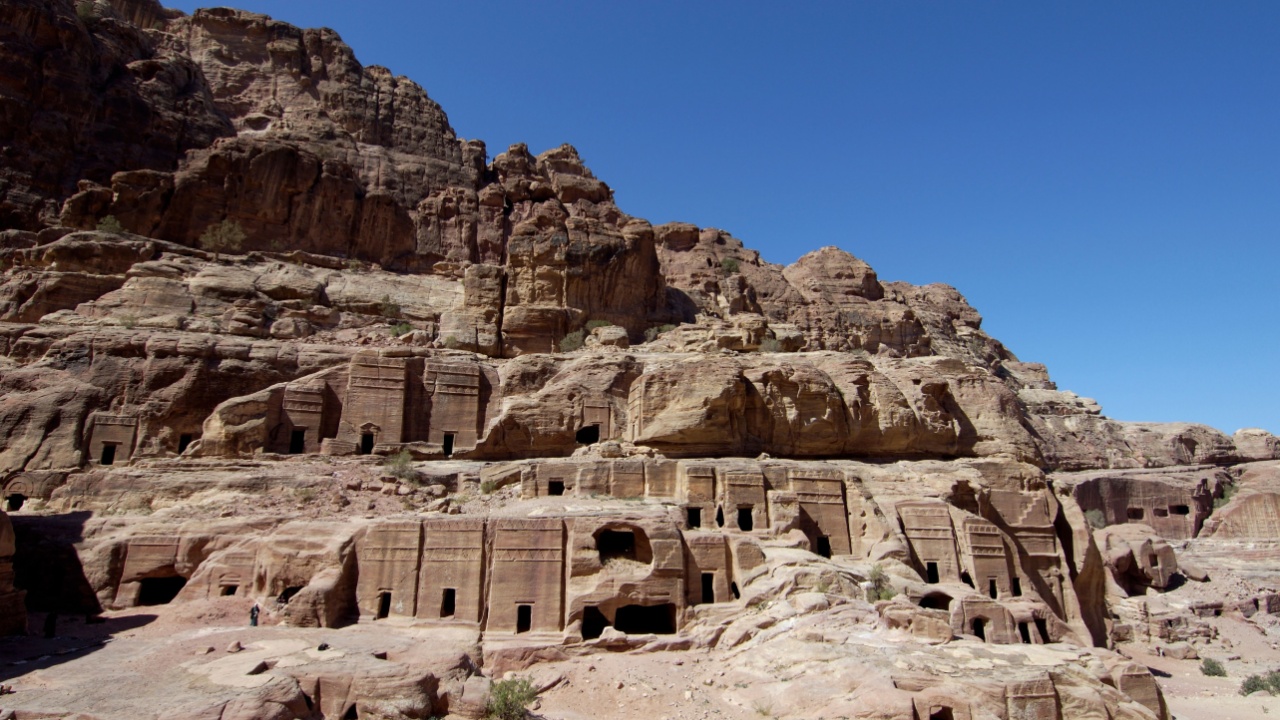
The Nabateans were the master architects behind the stunning rock-cut city of Petra in modern-day Jordan. Originally a nomadic people, they settled and grew wealthy by controlling crucial trade routes that transported frankincense, myrrh, and spices. Their engineering skill was remarkable; they carved elaborate tombs and temples directly into sandstone cliffs and built a complex system of dams, cisterns, and aqueducts to collect and store water in the arid desert.
For centuries, Petra was a bustling cosmopolitan hub. But by the 4th century CE, its prominence began to wane as sea trade routes grew more popular. After a major earthquake in 363 CE damaged the city and its vital water systems, Petra’s decline accelerated. Its inhabitants slowly moved away, and the once-thriving capital was eventually left to the desert sands until its rediscovery in the 19th century.

Image Credit: Shutterstock.
Considered the “mother culture” of Mesoamerica, the Olmecs laid the groundwork for many civilizations that followed, including the Maya and the Aztecs. From 1500 BCE, they thrived in the tropical lowlands of south-central Mexico. They are best known for their colossal stone head sculptures, weighing up to 50 tons and believed to depict their rulers.
The Olmecs also likely developed the first writing system in the Americas and were early practitioners of the famed Mesoamerican ballgame. Around 400 BCE, their major centers were systematically depopulated and, in some cases, monuments were deliberately defaced and buried. The reasons for this intentional abandonment are unknown, but possibilities include environmental changes, volcanic eruptions, or internal social strife.

Image Credit: Shutterstock.
The Ancestral Puebloans built breathtaking cliff dwellings in the Four Corners region of the United States, places like Mesa Verde and Chaco Canyon. From around 1 CE, they evolved from a nomadic society into a sophisticated culture known for its architectural skill and intricate pottery. Their multi-story great houses and cliffside villages were engineering feats that housed hundreds and served as ceremonial and trade centers.
By 1300 CE, they had abandoned these settlements. Evidence points to several factors, including the Great Drought, which strained agricultural resources. This, combined with resource depletion and social unrest, likely forced them to migrate south and east, forming new communities, including the modern Pueblo peoples.

Image Credit: Shutterstock.
The Kingdom of Aksum, located in modern-day Ethiopia and Eritrea, was a major player in the commercial world of late antiquity. At its height, it was a dominant naval and trading power, controlling routes between the Roman Empire and ancient India. Aksum was one of the first empires to officially adopt Christianity and developed its own written script, Ge’ez.
The kingdom is famous for its towering obelisks, or stelae, with the largest reaching over 70 feet. By the 7th century CE, Aksum’s power declined. The rise of Islam and the Persian Empire cut off its Mediterranean trade, while climate change reduced land fertility, collapsing its economy.

Image Credit: Kenny Arne Lang Antonsen – Own work – CC BY-SA 4.0/Wiki Commons.
One of Europe’s most intriguing Neolithic societies, the Cucuteni–Trypillia Culture flourished in what is now Romania, Moldova, and Ukraine. Between approximately 5500 and 2750 BCE, they built some of the largest settlements in the prehistoric world, with some housing up to 15,000 people. They were skilled farmers and created intricately designed pottery with swirling patterns.
One of their most peculiar customs was the deliberate burning of their settlements every 60 to 80 years before rebuilding on top of the old ashes. The reason for this ritual is a subject of intense debate; it could have been a cleansing ritual or a symbolic way to mark the end of a cycle. Around 2750 BCE, this cycle stopped. The culture vanished, not with a final, fiery blaze, but with a quiet fade.

Image Credit: Erman Gunes / Shutterstock.
The Hittites were a major power in the ancient Near East, a formidable empire centered in Anatolia (modern Turkey) during the Bronze Age. They were military innovators, known for their skilled use of chariots, and were rivals to the Egyptians, even signing the world’s first known peace treaty with them after the Battle of Kadesh.
The Hittites developed their own Indo-European language and a legal code that was considered quite advanced for its time. Around 1200 BCE, their world came crashing down as part of the wider Late Bronze Age collapse. Major Hittite cities were burned and abandoned. The collapse of this powerful empire was likely caused by a mix of factors: invasions by the “Sea Peoples,” internal rebellion, crop failures, and disrupted trade routes.

Image Credit: Shutterstock.
The Mycenaeans were the heroes of Greek legend, the civilization of King Agamemnon, who, according to Homer, led the Greeks in the Trojan War. Dominating mainland Greece from about 1600 to 1100 BCE, they were a society of warriors, traders, and engineers.
They built fortified citadels, impressive “beehive” tombs, and developed Linear B, an early form of Greek script. Their culture was rich and spread across the Aegean, but like the Hittites, they fell victim to the Late Bronze Age collapse. Around 1100 BCE, their palaces were destroyed, trade networks vanished, and their writing system was forgotten. The population plummeted, plunging Greece into a “Dark Age” for several hundred years.

Image Credit: Shutterstock
The stories of these lost civilizations invite us to marvel at human creativity and resilience. Each ruin, artifact, and legend is a doorway into the ingenuity of people who shaped their worlds in ways that still echo today. Exploring their mysteries is less about endings and more about rediscovering beginnings, how art, architecture, and ideas continue to inspire across centuries. While many questions remain unanswered, the pursuit itself enriches our understanding of what it means to build, to imagine, and to leave a mark. The silence they left behind is not emptiness, but an open invitation to listen more closely to the past.
I’m a Language and Literary Studies (Honors) graduate with 11 years of experience in magazine and blog writing and content creation. I’m passionate about storytelling for change and believe in the power of words to make a difference. My writing is thought-provoking, accessible, and engaging, focusing on the Psychology of human behavior, complex social issues, personal experiences, and the latest trends. I’m a wife and a Mom of three.
I’m a Language and Literary Studies (Honors) graduate with 11 years of experience in magazine and blog writing and content creation. I’m passionate about storytelling for change and believe in the power of words to make a difference. My writing is thought-provoking, accessible, and engaging, focusing on the Psychology of human behavior, complex social issues, personal experiences, and the latest trends. I’m a wife and a Mom of three.
Auto Amazon Links: No products found.

























)