






5 Mind-Blowing Theories Behind the Maya Collapse That Will Make You Question History and Your Horoscope!
Added on November 29, 2025 inFun And Facts Cards




Numerology Meets Netflix: Get Your Daily Dose of Cosmic Cinema Suggestions Powered By Our AI Astrologer. Find The Show Or Movie You Were Meant To See!



Ever wonder if today’s Mercury retrograde could explain why the mighty Maya civilization suddenly packed up their pyramids and ghosted their cities around 900 CE? I mean, who hasn’t felt like dropping everything when the universe throws a cosmic curveball! The Maya dazzled the ancient world with mind-boggling calendars, awe-inspiring pyramids, and writing systems that could put today’s cryptic texts to shame. Yet, their grand southern lowland cities fell silent, puzzling historians like a riddle wrapped in an enigma… and maybe even a bit of celestial mischief. Was it climate chaos, political drama, environmental burnout, or just a collective “been there, done that” vibe that pulled the rug right from under their sprawling urban centers? Buckle up, because we’re diving into five killer theories that might just decode the Classic Maya collapse — a story as complex as today’s astrology charts, and just as intriguing.
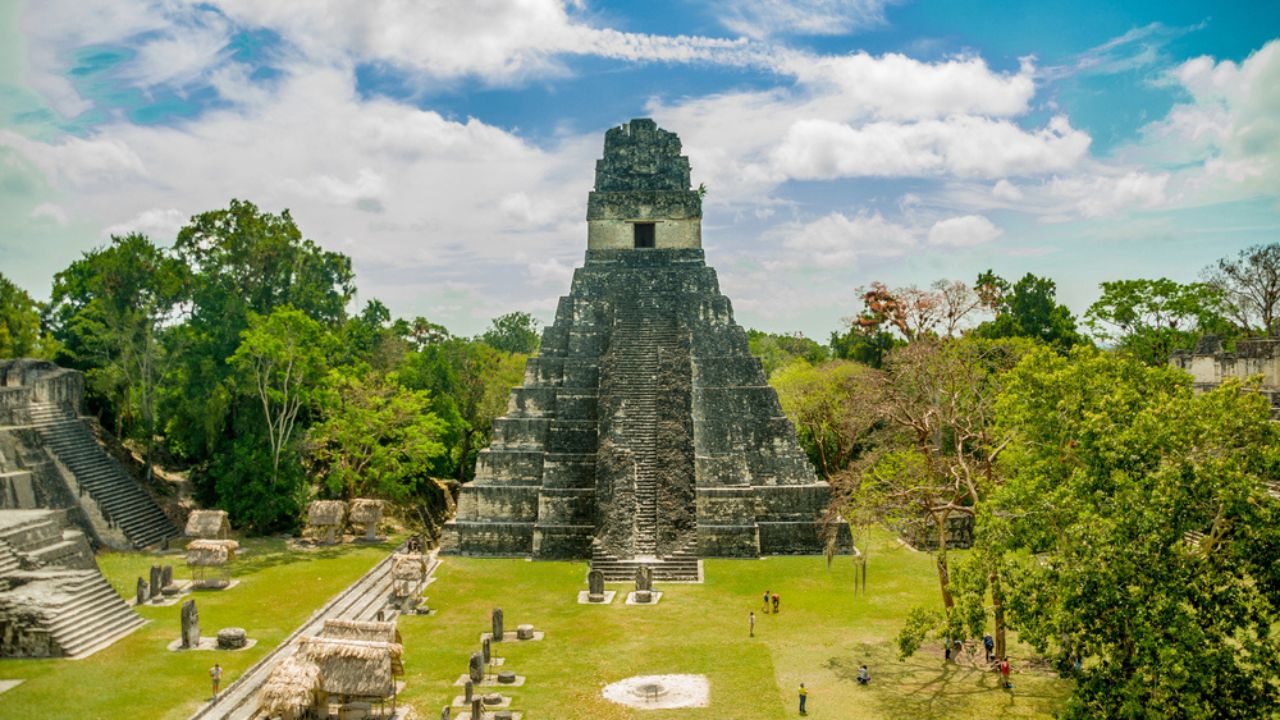
The Maya civilization, known for its intricate calendar systems, monumental pyramids, and advanced writing, represents a high point of human achievement in the ancient Americas. Yet, around 900 CE, many of its great southern lowland cities were abandoned.
The once-bustling metropolises fell silent, leaving behind mysteries that have puzzled historians and archaeologists for centuries. Why would a society so sophisticated seemingly vanish? There isn’t one simple answer. Instead, a combination of factors likely contributed to this complex societal shift.
Here are five leading theories that attempt to explain the Classic Maya collapse.

Image Credit: Deposit Photos.
One of the most widely accepted theories points to a dramatic shift in climate. The Maya region experienced a series of severe, long-term droughts that threw the entire civilization off balance. Their agricultural system, which fed millions, was heavily dependent on consistent rainfall.
When the rains stopped, so did the food production. Reservoirs that cities relied on for water began to dry up, making it nearly impossible to support the dense urban populations. The resulting crop failures led to widespread famine, which in turn weakened the authority of political leaders and created immense social strain.

Image Credit: Shutterstock.
The Maya were expert farmers, but their success may have contained the seeds of their decline. To feed their growing populations, they engaged in intensive agriculture, which put a heavy burden on the environment. Overfarming gradually exhausted the fertility of the soil, making it harder to grow enough food.
At the same time, widespread deforestation to clear land for crops and to provide wood for fuel and construction had unintended consequences. Fewer trees may have led to reduced local rainfall and increased soil erosion, further damaging the agricultural landscape. Eventually, the land simply could not sustain the large urban centers anymore.

Image Credit: ENRICO FERORELLI, DOUG STERN – Public Domain/Wiki Commons.
A peaceful society this was not, at least not toward the end. Evidence indicates that as resources became increasingly scarce, competition among the various Maya city-states intensified. Conflict became more common and more brutal. Cities that once traded with each other began building heavy fortifications for defense.
This period of escalating warfare disrupted critical trade routes, weakened political alliances, and made daily life precarious. The constant threat of violence caused many people to flee the instability of the cities in search of safer territories.

Image Credit: katiekk at Deposit Photos.
A society’s stability often rests on the people’s confidence in their leaders. During the collapse, Maya rulers, who were seen as intermediaries to the gods, found themselves unable to solve the cascading problems of food shortages and constant insecurity. As prayers for rain went unanswered and military campaigns failed, faith in the ruling class eroded.
Growing inequality between the elite and the common people likely added to the discontent. This loss of confidence contributed to a breakdown of the complex political structures that held cities together, making them increasingly difficult to govern and leading many inhabitants to abandon them altogether.

Image Credit: Spielvogel – Own work – CC BY-SA 4.0/Wiki Commons.
This newer theory adds an interesting twist to the story. It suggests that the collapse wasn’t just disasters that pushed people out of cities; opportunity also pulled them away. Recent research indicates that some periods of urban decline actually coincided with improvements in the climate. As rainfall patterns stabilized and the countryside recovered, rural areas became productive and attractive again.
For people living in crowded, disease-prone, and socially unequal cities, moving away offered a chance for a better life. They could regain personal autonomy, secure better land for their families, and escape the control of a failing political system. The decline of the cities was also a story of people actively choosing a different, more sustainable way of living.

Image Credit: Deposit Photos.
Ultimately, the term “collapse” may be somewhat misleading. The Maya people and their culture did not disappear; they adapted and shifted. Rather than a single catastrophic event, the decline of the great cities was a gradual process driven by a mix of environmental pressures, political failures, and human choices.
Understanding this transition reminds us that societies are complex systems, and the delicate interplay between nature, governance, and the individual pursuit of a better life shapes their paths.
I’m a Language and Literary Studies (Honors) graduate with 11 years of experience in magazine and blog writing and content creation. I’m passionate about storytelling for change and believe in the power of words to make a difference. My writing is thought-provoking, accessible, and engaging, focusing on the Psychology of human behavior, complex social issues, personal experiences, and the latest trends. I’m a wife and a Mom of three.
I’m a Language and Literary Studies (Honors) graduate with 11 years of experience in magazine and blog writing and content creation. I’m passionate about storytelling for change and believe in the power of words to make a difference. My writing is thought-provoking, accessible, and engaging, focusing on the Psychology of human behavior, complex social issues, personal experiences, and the latest trends. I’m a wife and a Mom of three.
Auto Amazon Links: No products found.















This will close in 0 seconds

This will close in 0 seconds











)