




12 Jaw-Dropping Historical Legends Your Teachers Totally Forgot to Mention—Prepare to Have Your Mind Blown!
Added on December 8, 2025 inFun And Facts Cards




Numerology Meets Netflix: Get Your Daily Dose of Cosmic Cinema Suggestions Powered By Our AI Astrologer. Find The Show Or Movie You Were Meant To See!
Ever notice how history class often feels like a high-speed chase through dusty dates and grand battles, barely stopping for the flashy “main characters”? It’s like the universe is conspiring to keep some of the coolest players hidden in the shadows — maybe Mercury’s retrograde is messing with our collective memory! What if I told you that behind those sidelined footnotes lurk stories just as wild, surprising, and downright dramatic as the ones that get all the spotlight? Today, we’re steering our cosmic ship toward some lesser-known, yet absolutely fascinating figures — from a pirate queen who bargained with Elizabeth I in Latin to a physicist who flipped a fundamental law on its head. Buckle up; this ain’t your typical history class. Ready to uncover the stars history forgot? LEARN MORE.
In school, history often feels like a sprint through centuries of wars, inventions, and royal family trees, with only quick pit stops for the “big names.” Because of this, some seriously interesting people get left on the cutting room floor.
The stories we learn often follow a familiar script, leaving out figures whose lives were just as impactful, dramatic, and sometimes more surprising than the headliners. From a pirate queen who negotiated with royalty to the scientist who proved a fundamental law of physics, here are some of the people who add new layers to the stories we thought we knew.

Image Credit: Suzanne Mischyshyn – CC BY-SA 2.0/Wiki Commons.
Grace O’Malley, or Gráinne Mhaol, was the chieftain of the Ó Máille clan in 16th-century Ireland and a formidable pirate queen. At a time when women were expected to be absent from public life, O’Malley commanded a fleet of ships and hundreds of men. She controlled the seas off the west coast of Ireland, enforcing her rule through trade, politics, and piracy.
Her exploits made her a thorn in the side of the English Crown, which was attempting to solidify its control over Ireland. In a famous encounter, she sailed to London to negotiate directly with Queen Elizabeth I, securing the release of her son and the return of her lands. She did this all while speaking in Latin, as neither spoke the other’s native language.

Image Credit: Lynn Gilbert – Own work – CC BY-SA 4.0/Wiki Commons.
Chien-Shiung Wu was a Chinese-American physicist whose work was central to the Manhattan Project and modern physics. In 1956, she conducted the “Wu experiment,” which disproved the long-held law of conservation of parity. This law stated that in quantum mechanics, the universe would not differentiate between left and right.
Wu’s experiment proved this was not the case, a finding that reshaped our understanding of particle physics. Her male colleagues who had theorized the concept, Tsung-Dao Lee and Chen-Ning Yang, received the 1957 Nobel Prize in Physics for the discovery. Wu’s critical experimental contribution was not formally recognized by the Nobel committee, an omission many consider a significant oversight.

Image Credit: Cristoforo Dall’Acqua – Public Domain/Wiki Commons.
In the 18th century, women were forbidden from sailing on French naval expeditions. Jeanne Baret, a skilled botanist, got around this rule by disguising herself as a man. She joined the global expedition of explorer Louis Antoine de Bougainville, serving as the valet to the ship’s naturalist, Philibert Commerson.
During the journey, she helped collect over 6,000 plant specimens, many of which were new to European science. Her identity was eventually discovered, but she completed the circumnavigation, becoming the first woman known to have sailed around the world.

Image Credit: The National Library of Medicine, Mary C. Gillet – Public Domain/Wiki Commons.
For centuries, yellow fever was a deadly mystery, devastating populations across the Americas. Cuban epidemiologist Carlos Finlay was the first to propose the correct theory of its transmission. In 1881, he presented evidence that a specific mosquito, Aedes aegypti, was the carrier of the disease.
His hypothesis was dismissed by the scientific community for two decades. It was only after American researchers confirmed his findings during the construction of the Panama Canal that his work was finally accepted. Finlay’s discovery paved the way for controlling the disease and saved countless lives.

Image Credit: Unknown author – Public Domain/Wiki Commons.
Joseph Laroche was a Haitian engineer and the only known passenger of Black descent to travel on the Titanic. Born into a prominent Haitian family, he studied engineering in France, where he met and married a French woman named Juliette Lafargue. Facing racial discrimination that prevented him from finding suitable employment in France, he decided to move his growing family back to Haiti.
He booked second-class passage on the Titanic for himself, his wife, and their two young daughters. When the ship sank, Joseph ensured his family made it onto a lifeboat before he went down with the vessel. His wife and daughters survived. Maybe the Titanic movie should have been about him.

Image Credit: Anne Ridley Sedgwick – Photo courtesy of Massachusetts Historical Society – Public Domain/Wiki Commons.
Elizabeth Freeman, also known as “Mum Bett,” was one of the first enslaved people in Massachusetts to sue for and win her freedom. In 1781, after hearing the newly ratified Massachusetts Constitution read aloud, which declared all men are “born free and equal,” she sought legal counsel.
Her case, Brom and Bett v. Ashley, argued that the institution of slavery was incompatible with the state’s new constitution. The court ruled in her favor, setting a legal precedent that contributed to the abolition of slavery in Massachusetts. After gaining her freedom, she worked as a paid servant and healer.

Image Credit: Unknown author – Public Domain/Wiki Commons.
Agnes Sampson was a Scottish midwife and healer who became a central figure in the North Berwick witch trials of the 1590s. When King James VI of Scotland experienced a perilous storm while returning from Denmark with his new bride, he became convinced that witches had conspired to kill him. Sampson was accused of being part of this conspiracy.
Under severe torture, she confessed to meeting with the devil and raising storms to sink the king’s ship. Her detailed confession implicated many others and fueled a widespread panic. She was ultimately executed in 1591, becoming one of the most famous victims of the European witch hunts.

Image Credit: Osama Shukir Muhammed Amin FRCP(Glasg) – Own work – CC BY-SA 4.0/Wiki Commons.
Sargon II was a powerful king of the Neo-Assyrian Empire who ruled from 722 to 705 BCE. He came to power after the mysterious disappearance of his predecessor and spent his reign expanding and consolidating the empire through military campaigns. He conquered the Kingdom of Israel, deporting thousands of its inhabitants in the event known as the “Assyrian captivity.”
He also built a magnificent new capital city, Dur-Sharrukin (“Fortress of Sargon”). Despite his significant military and architectural achievements, his legacy was often overshadowed by other Assyrian rulers like his son, Sennacherib.

Image Credit: Unknown author – Public Domain/Wiki Commons.
Eliza Carpenter was born into slavery in Virginia in 1851 and went on to become one of the few African American racehorse owners and jockeys in the American West. After gaining her freedom, she learned to train, ride, and race horses. She was a skilled rider, even winning a race at the age of 60.
Carpenter was also a savvy businesswoman, owning a stable of racehorses. She was known for her determination and independence in a field dominated by white men.

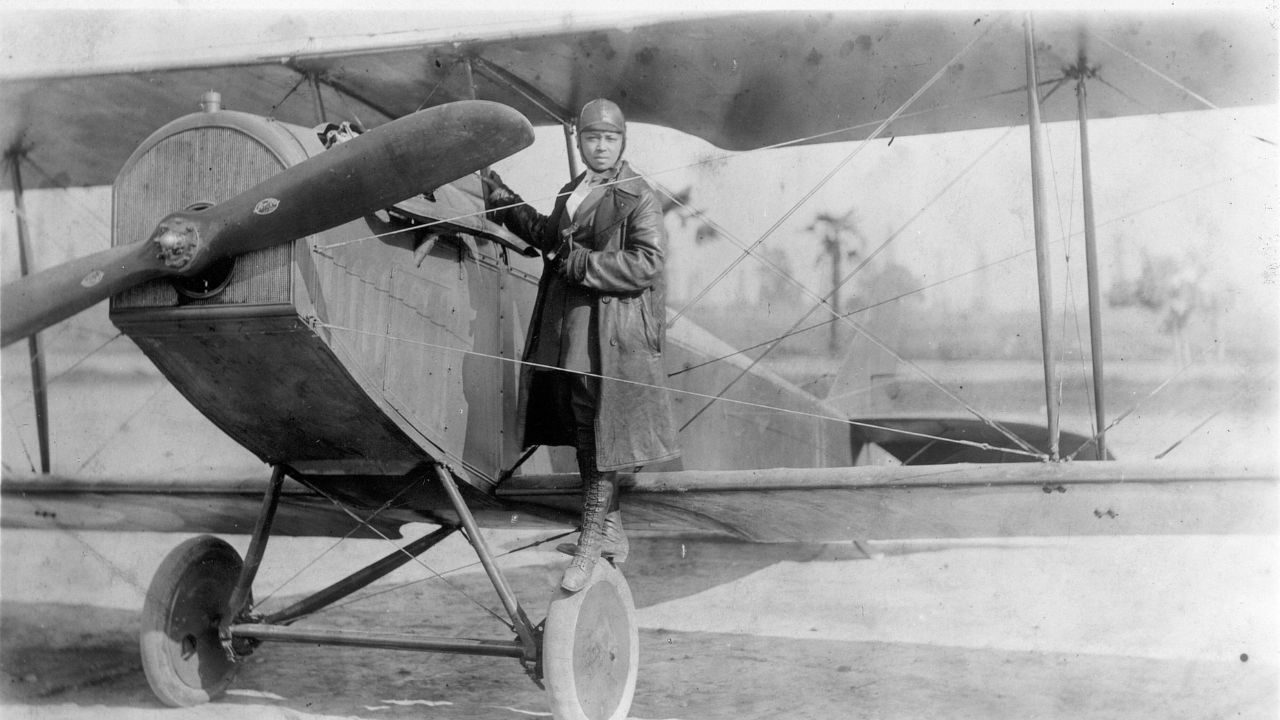
Image Credit: George Rinhart/Corbis via Getty Images – Public Domain/Wiki Commons.
Bessie Coleman was the first woman of African American and Native American descent to hold a pilot’s license. Faced with racial and gender discrimination that barred her from flight schools in the United States, she learned French and moved to France to pursue her dream.
In 1921, she earned her international pilot’s license. Returning to the U.S., she became a sensation, performing daring stunts in airshows across the country. She used her fame to encourage other African Americans to fly and refused to perform at venues that were segregated.

Image Credit: Unidentified painter, Public Domain/Wiki Commons.
John Dee was a brilliant mathematician, astronomer, and advisor to Queen Elizabeth I. He was one of the most learned men of his age, possessing one of the largest libraries in England. His work in mathematics and navigation was vital to England’s voyages of discovery.
However, his reputation today is often colored by his later interest in the occult. Dee spent years attempting to communicate with angels through scryers, or crystal-gazers, hoping to unlock divine knowledge. This esoteric pursuit eventually led to his fall from favor and has since overshadowed his significant scientific contributions.

Image Credit: Joseph Simpson – A Gallery of Heroes and Heroines, 1915 – Public Domain/Wiki Commons.
Elizabeth Fry was a Quaker social reformer who led a major movement for prison reform in 19th-century Britain. After visiting Newgate Prison in London, she was horrified by the squalid conditions endured by female prisoners and their children. She began working to improve their lives, advocating for segregation of the sexes, female guards for female inmates, and education.
Her efforts led to the creation of the Association for the Improvement of the Female Prisoners in Newgate. This successfully pushed for legislation to improve prison conditions across the country and abroad.

Image Credit: Smithsonian Institution – Restored by Adam Cuerden – Flickr: Chien-shiung Wu (1912-1997) – No restrictions/Wiki Commons.
History is much more than a collection of dates and famous names. It is a vast tapestry woven from the lives of millions of people, each with a unique story. Exploring the lives of figures like these gives us a richer, more complete picture of the past. The next time you find a footnote in a history book, remember it might just be a doorway to an incredible story that is waiting to be told.
I’m a Language and Literary Studies (Honors) graduate with 11 years of experience in magazine and blog writing and content creation. I’m passionate about storytelling for change and believe in the power of words to make a difference. My writing is thought-provoking, accessible, and engaging, focusing on the Psychology of human behavior, complex social issues, personal experiences, and the latest trends. I’m a wife and a Mom of three.
I’m a Language and Literary Studies (Honors) graduate with 11 years of experience in magazine and blog writing and content creation. I’m passionate about storytelling for change and believe in the power of words to make a difference. My writing is thought-provoking, accessible, and engaging, focusing on the Psychology of human behavior, complex social issues, personal experiences, and the latest trends. I’m a wife and a Mom of three.
Auto Amazon Links: No products found.












This will close in 0 seconds

This will close in 0 seconds











)