




10 American Lakes So Deep, Even Scorpio Wouldn’t Dare Dive In — What’s Lurking Down There?
Added on December 11, 2025 inFun And Facts Cards




Numerology Meets Netflix: Get Your Daily Dose of Cosmic Cinema Suggestions Powered By Our AI Astrologer. Find The Show Or Movie You Were Meant To See!

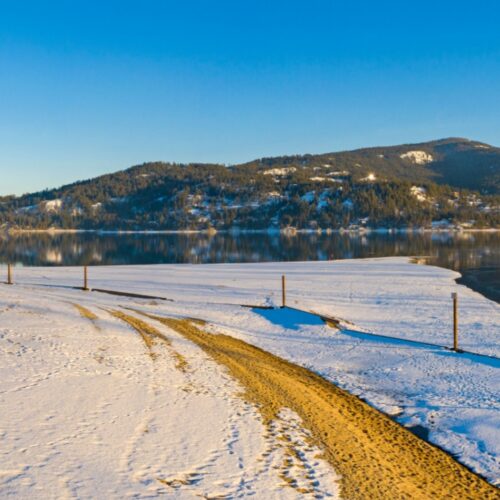
Ever wondered if the stars have anything to do with the mysteries lurking beneath America’s most massive lakes? I mean, the planets might be aligning overhead, but what secrets are swirling in the dark, unfathomable depths down below? The United States is dotted with lakes so vast and cavernous that parts of their floors are still uncharted, leaving even the most adventurous explorers scratching their heads. From volcanic craters crafted by ancient eruptions to icy valleys carved by glaciers long ago, these watery depths challenge our imagination and push science to its limits. So, while the cosmos twinkles with endless possibilities, here’s a dive into ten American lakes whose mysterious bottoms might just hold the next great discovery—or, at the very least, a legendary ‘lake monster’ story to ponder under tonight’s starry sky. LEARN MORE.
The United States is home to some truly massive bodies of water. While many are famous for their sunny shores and recreational opportunities, a select few hold secrets in their immense depths. These lakes are so profound that parts of their floors remain largely unexplored, fueling stories and scientific curiosity.
From volcanic craters to ancient glacial valleys, these underwater realms present unique challenges to exploration, leaving much to the imagination. Here are ten American lakes whose bottom is a mystery.

Image Credit: Deposit Photos.
Formed in the caldera of a collapsed volcano, Crater Lake is the deepest lake in the United States. Its stunningly blue water fills a basin left behind by the eruption of Mount Mazama thousands of years ago. The lake’s depth and clarity are legendary, but its bottom is a complex landscape of volcanic formations, hydrothermal vents, and sediment.
Submersibles have explored parts of the floor, revealing a world shaped by ancient geology, but the full extent of its underwater features is still being mapped. The lake is fed almost entirely by rain and snow, contributing to its remarkable purity.

Image Credit: Deposit Photos.
Straddling the border of California and Nevada, Lake Tahoe is the second deepest lake in the U.S. and one of the largest alpine lakes in North America. Its clarity is famous, allowing visibility to significant depths. The lake’s basin was formed by geologic faulting, creating a massive trench between mountain ranges.
Below the surface, the terrain drops off steeply. Sonar mapping has provided a picture of the lakebed, but its sheer size and depth mean that detailed exploration is an ongoing process. Legends of submerged railroad tracks and even a sea monster named Tessie add to its mystique.

Image Credit: Oydman (talk) – self-made – CC BY-SA 3.0/Wiki Commons.
This one is a bit different. The Lost Sea is not a surface lake but America’s largest underground lake, located within a vast cave system called Craighead Caverns. What visitors see on a guided tour is only a fraction of the total body of water. The explored area is impressive, but the lake extends into a series of water-filled passages that are so tight and complex that their full dimensions are unknown.
Divers have attempted to map these submerged tunnels, but the challenging conditions have prevented a complete survey. This has left the true size of the Lost Sea a genuine mystery.

Image Credit: Shutterstock.
Carving a path through the Cascade Mountains, Lake Chelan is a long, narrow, and incredibly deep body of water. This “finger lake” occupies a glacial trough that was scoured out by ice sheets during the last ice age. Its bottom reaches a point more than 380 feet below sea level, making it one of the deepest gorges in the country.
The lake’s fjord-like shape means its depths are not easily accessible. While the general topography is understood, the extreme pressures and cold temperatures at the bottom make comprehensive biological and geological surveys difficult.

Image Credit: Deposit Photos.
As the largest freshwater lake in the world by surface area, Lake Superior’s size is difficult to comprehend. It is also the deepest of the Great Lakes. Its floor is a varied landscape of underwater cliffs, canyons, and vast plains, not to mention hundreds of shipwrecks preserved in its cold, dark water.
While modern bathymetric technology has allowed scientists to create detailed maps of the lakebed, its immense area means that there are still regions that have not been closely studied. The conditions at the bottom are extreme, creating a stable environment where things change very slowly.

Image Credit: U.S. Army Corps of Engineers, Public Domain/Wiki Commons.
Located in the Idaho Panhandle, Lake Pend Oreille is a remnant of a massive Ice Age flood. This deep, glacially carved lake is so profound that the U.S. Navy uses it for testing submarines and sonar equipment. The Acoustic Research Detachment based there takes advantage of the lake’s depth and acoustic properties, which mimic oceanic conditions.
Despite its use for advanced naval research, much of the lake’s ecosystem and geology at its deepest points remain areas of active scientific study. The combination of clear, cold water and extreme depth creates a unique environment.

Image Credit: Deposit Photos.
The third largest of the Great Lakes, Lake Michigan, has a complex underwater topography. Its northern and southern basins have different characteristics, with the deepest point located in the Chippewa Basin. This area contains underwater hills and valleys formed by glacial activity.
Like Lake Superior, its floor is home to a multitude of well-preserved shipwrecks. It also features a series of underwater rock formations, including a circular stone arrangement discovered in the Grand Traverse Bay area that has prompted much speculation. The lake’s vastness continues to yield new finds.

Image Credit: Deposit Photos.
The largest natural freshwater lake west of the Mississippi River, Flathead Lake in Montana, is another product of glacial carving. The lake is known for its remarkably clean water, a result of being fed by the pristine rivers of the surrounding mountain ranges.
While not as deep as some others on this list, its considerable depth and size support a rich ecosystem. The lakebed contains sediment layers that hold clues to the region’s past climate. There are also local legends of a “Flathead Lake Monster,” a story that adds a layer of folklore to the deep, blue waters.

Image Credit: Deposit Photos.
Situated high in the mountains of Yellowstone National Park, Yellowstone Lake sits atop one of the world’s largest supervolcanoes. The lakebed is an active geothermal area, with geysers, hot springs, and fumaroles hidden beneath the water’s surface. A “bulge” on the lake floor has been rising and falling, indicating movement in the magma chamber below.
Research submersibles have explored these hydrothermal vents, finding unique chemical and biological communities. The dynamic and potentially hazardous nature of this underwater world makes it a compelling but challenging place to study.

Image credit: Shutterstock.
Set within the rugged wilderness of Lake Clark National Park, this turquoise-colored lake is fed by glaciers. It fills a long, deep valley carved by ice, similar to Lake Chelan. Its remote location and the challenging Alaskan weather make extensive exploration difficult.
The lake’s bottom is a collection of glacial silt and rock, and its ecosystem is adapted to the cold, nutrient-rich water. Its depth, combined with its isolation, means that it remains one of the more pristine and less-studied large lakes in the United States.

Image Credit: Deposit Photos.
These deep lakes are more than just geographical features; they are archives of natural history and hubs of scientific inquiry. Exploring their floors is not about finding monsters, but about understanding the powerful geological forces that shape our planet. Each submersible dive and sonar scan helps piece together a puzzle that began millennia ago, reminding us that some of the greatest frontiers for discovery are not in distant galaxies, but right beneath the surface of the water.
I’m a Language and Literary Studies (Honors) graduate with 11 years of experience in magazine and blog writing and content creation. I’m passionate about storytelling for change and believe in the power of words to make a difference. My writing is thought-provoking, accessible, and engaging, focusing on the Psychology of human behavior, complex social issues, personal experiences, and the latest trends. I’m a wife and a Mom of three.
I’m a Language and Literary Studies (Honors) graduate with 11 years of experience in magazine and blog writing and content creation. I’m passionate about storytelling for change and believe in the power of words to make a difference. My writing is thought-provoking, accessible, and engaging, focusing on the Psychology of human behavior, complex social issues, personal experiences, and the latest trends. I’m a wife and a Mom of three.

Auto Amazon Links: No products found.














This will close in 0 seconds

This will close in 0 seconds











)